
The Mistake Almost Everyone Makes First
As the weather turns, a lot of homeowners grab the can of WD-40 sitting on the shelf and spray down every moving part on the garage door — hinges, rollers, the track, even the springs. It feels productive. It's already in the garage, it takes five minutes, and spraying something on a noisy door feels like "maintenance." The problem is that WD-40 is a solvent and water-displacer, not a lubricant. It evaporates quickly and leaves behind a thin, sticky residue that actually attracts dust, grit, and road salt tracked in on tires and boots. By January, parts that were sprayed in October are often grittier and slower-moving than if nothing had been done at all — right when cold makes everything stiffer to begin with.
Lubricate the Right Way
Use a lithium-based or silicone-based garage door lubricant made for the job. Apply it to the hinges, roller bearings, the springs themselves, and the bearing plates at the top of the track. Skip the track — rollers ride inside it, and a slick track just makes the door more likely to slip or run unevenly. A light coat now, before the first hard freeze, keeps metal-on-metal parts moving smoothly instead of grinding through winter.
Check the Weatherstripping Before the First Ice
Weatherstripping takes a beating here — baked by humid summer sun, then flexed stiff by freezing nights. Look at the rubber seal along the bottom of the door (the astragal) for cracking, flattening, or gaps where it no longer touches the floor evenly. Do the same with the vinyl stop along the sides and top of the frame. A simple test: close the door at night and look for daylight coming through the edges, or run your hand along the bottom seal for drafts. A worn seal lets in wind-driven slush, road salt spray, and cold air — which matters a lot if the garage is attached to the house or you keep a freezer or workbench out there.
Give the Springs a Real Look
Torsion springs live under constant, heavy tension, and cold makes steel more brittle. A spring that's been quietly fatiguing all year — especially one that's gone through the humidity of summer without lubrication — is more likely to snap on a freezing morning than in July. You can check balance yourself: disconnect the opener (pull the release cord), lift the door about halfway by hand, and let go. A properly balanced door should stay put. If it drifts down or shoots up, the spring tension is off. Don't try to adjust or replace torsion springs yourself — they're wound under enough force to cause serious injury. This is one job worth leaving to someone with the right bars and experience.
Test the Opener and Safety Sensors
Cold and condensation are hard on photo-eye sensors near the bottom of the tracks. Wipe the lenses clean and make sure they're still aligned — a sensor knocked slightly out of position over the summer can cause the door to refuse to close, or worse, fail to reverse when it should. Test the auto-reverse feature by placing a 2x4 flat on the ground where the door closes; it should hit the wood and reverse immediately. Replace remote and keypad batteries now, before cold weather makes battery performance worse, and check that any battery backup on the opener itself is holding a charge — handy during winter power outages.
Inspect Hardware and the Track
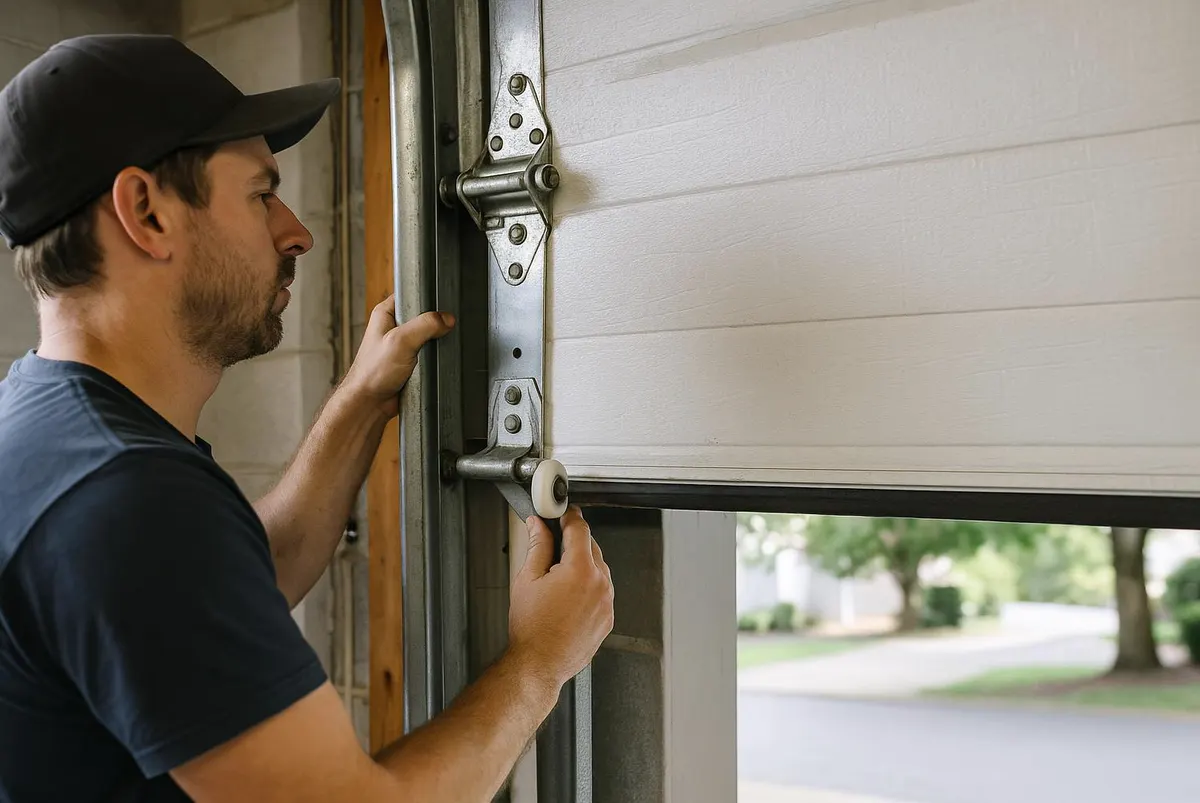
Walk the full length of both tracks and look at hinges, rollers, and mounting bolts for rust, especially if road salt gets tracked into the garage all winter. Tighten any bolts that have loosened — temperature swings between hot garages in summer and freezing ones in winter cause wood framing and hardware to expand and contract, which can work screws loose over a season. If a roller looks worn, cracked, or flat on one side, it's cheaper to replace it now than to deal with a door that jumps track during a January storm.
Don't Forget Condensation
Humid summers followed by cold winters mean condensation can form on uninsulated steel door panels, sometimes leading to surface rust over time. If you notice moisture beading on the inside of the door, improving garage ventilation or upgrading to an insulated door panel can help.
When to Call East Palestine Garage Door
If your balance test showed a problem, if a spring looks stretched, rusted, or uneven, or if the door is noticeably harder to lift than it used to be, that's a sign of spring wear that's safer to have inspected before it fails in freezing weather. Our spring replacement service covers exactly that — swapping worn torsion or extension springs with properly matched, correctly tensioned replacements. And if you'd rather have a full once-over before winter instead of working through this list piece by piece, our garage door maintenance visits cover lubrication, hardware tightening, sensor alignment, and a balance check in one trip.
If you're in East Palestine, Salem, Columbiana, Lisbon, Leetonia, Negley, Darlington, or New Waterford and want your garage door ready before the ice shows up, call East Palestine Garage Door today to schedule your fall maintenance visit.